Leave Your Message
0%

Picking the right packaging partner can really make or break a vape brand’s reputation, safety standards, and even how well it does internationally. So, I put together this guide highlighting 10 top custom vape packaging suppliers around the globe. Instead of just fancy product photos, I focused on what really matters—like their practical capabilities and ability to handle regional rules, responsible marketing limits, labeling requirements, and material restrictions. Trust me, a good supplier should be able to walk you through every step with clear docs and updates.

In the world of sourcing, it’s often the little things that trip you up. For example, a carton might look super premium but fail safety tests if it drops, or that glossy finish could make recycling tougher. Even something as simple as a warning label translated incorrectly can turn into a costly mistake. If you're thinking about customizing your vape packaging, it’s a smart move to ask for physical samples, dielines, details on materials, color proofs, and quality control reports before going into full production. For those into disposable vapes, features like tamper-evidence, secure inserts, accurate labeling, and compliance are definitely worth scrutinizing. And don’t forget, child-resistant packaging rules differ from one market to another, so it’s crucial to double-check local requirements.

When I picked these suppliers, I looked at their experience, consistency in manufacturing, how fast they communicate, how deep their customization options are, and whether they operate responsibly. Sure, certifications can help, but they aren’t everything—make sure you verify what they cover and if they’re current. No supplier ranking is perfect—some might excel at printing but fall short on export support or minimum order flexibility. The best ones combine reliable production, honesty about what they can do, quick responses, and transparent quality checks. Before moving forward, you should compare quotes, view samples, and chat with regulatory pros to make sure everything lines up smoothly.

In short, finding the right partner isn’t just about looking good on paper—it’s about building a trustworthy relationship that covers all your bases.
10 Best Custom Vape Packaging Suppliers for Global Buyers

Global Vape Packaging Scope: Products, Materials, and Buyer Requirements

Global vape packaging buyers now evaluate more than appearance. Grand View Research estimated the global e-cigarette market at about USD 18.1 billion in 2023, with strong growth expected through 2030. This expansion increases demand for folding cartons, rigid boxes, aluminum tins, glass containers, and fitted inserts. Packaging suppliers should provide clear material specifications, batch controls, and consistent dimensional tolerances.

Material selection depends on product sensitivity and shipping conditions. Paperboard offers efficient printing and recyclable structures, while aluminum improves light and moisture protection. Glass provides a premium barrier but adds weight and breakage risk.

For Cbn Vape products sold where legally permitted, buyers may request child-resistant features, tamper evidence, leak-resistant components, and neutral labeling. The exact requirement changes by market.

Sustainability is also becoming measurable. Smithers’ packaging forecasts identify recycled content, lightweighting, and fiber-based formats as major development priorities through the decade. Buyers increasingly ask for FSC documentation, recycled-content certificates, migration testing, and packaging composition records. Independent laboratory reports matter more than attractive samples. They reduce uncertainty.

Real purchasing work is less polished.

A carton can pass visual inspection yet fail humidity testing. A closure may fit perfectly but slow filling lines. We have seen specifications change after transit trials. Small details matter. Supplier audits, pilot runs, and retained samples remain practical safeguards. Some buyers still underestimate them.

How to Rank the 10 Best Suppliers by MOQ, Lead Time, and Certifications

Ranking custom vape packaging suppliers requires evidence, not polished catalogues. For a Cbd Vape project, verify that every design supports lawful, age-restricted products in the destination market. PMMI’s 2023 packaging industry report highlights supply-chain reliability, labor pressure, and automation as major purchasing concerns. These factors directly affect delivery promises.

Use a 100-point scorecard. Give 35 points to lead time, 30 to certifications, and 20 to MOQ. Reserve 15 points for quality control. A supplier offering 5,000 boxes may outperform one requiring 50,000. Request a physical sample, dieline approval, and a written production schedule. Record the dates. A spreadsheet can mislead.

Certification evidence should include ISO 9001 quality systems, FSC documentation for paperboard, and relevant chemical compliance records, such as REACH or RoHS declarations. Smithers’ sustainable packaging research forecasts continued strong growth in recyclable and fiber-based packaging through 2028, making material transparency commercially important. Ask for audit dates, certificate numbers, and testing laboratories. Do not accept logos alone. Compare standard lead time with peak-season lead time. Also inspect carton compression, ink rub resistance, and barcode readability under warehouse lighting. The scoring model is useful, but imperfect; supplier communication may matter more than a perfect MOQ.

Child-Resistant Design: 16 CFR 1700 and ISO 8317 Testing

When global buyers compare custom vape packaging suppliers, child-resistant performance should guide the decision. Attractive printing is not enough. A package must protect children while remaining practical for responsible adult users. Suppliers should explain their testing process clearly and provide current laboratory documentation.

In the United States, 16 CFR 1700 evaluates whether children can open the package and whether adults can use it properly. The process involves controlled testing, age groups, opening attempts, and performance thresholds. ISO 8317 focuses on reclosable child-resistant packages and includes child and adult-use assessments. These standards are not interchangeable in every market. Buyers should confirm which requirement applies to their product and destination.

Ask suppliers for test reports, closure specifications, material details, and production controls. Request samples before approving large quantities. A cap that feels secure may still fail after repeated opening. Small changes can matter, including thread depth, liner thickness, and seal alignment. We have seen packaging projects slow down because testing began too late. That mistake is avoidable, but not always. Suppliers should also explain whether testing covers the final printed package, not only an early prototype. Documentation should identify the laboratory, test date, package design, and tested configuration. Quiet details matter. A reliable supplier welcomes technical questions and records revisions carefully.

10 Best Custom Vape Packaging Suppliers for Global Buyers - Child-Resistant Design: 16 CFR 1700 and ISO 8317 Testing
Rank Anonymous Supplier Profile Recommended Packaging Format Child-Resistant Compliance Route Testing Reference Customization Capability Tamper-Evident Option Best Buyer Use Case
1 Profile A — High-volume rigid-box specialist Paperboard carton with a child-resistant inner tray Strong fit
Designed for products requiring special packaging in the United States
16 CFR 1700.20 protocol; ISO 8317 for reclosable configurations where applicable Offset printing, foil stamping, embossing, spot UV, custom inserts Perforated tear strip or sealed inner pouch Large retail programs and multi-SKU product lines
2 Profile B — Reclosable container specialist Child-resistant screw-cap bottle with an outer carton Strong fit
Suitable for liquid products when the complete package is tested
ISO 8317 for reclosable packages; U.S. testing may require 16 CFR 1700.20 Custom bottle color, cap finish, label, carton and neck-band design Heat-shrink neck band or induction seal E-liquid and refill products sold in multiple markets
3 Profile C — Sustainable fiber-packaging specialist Folding carton made from recycled or FSC-certified paperboard Verify by test
Fiber material alone does not establish child resistance
Complete package evaluation under the applicable jurisdictional method Water-based coatings, soy or vegetable-based inks, molded-pulp inserts Paper seal, tear-open strip or sealed pouch Brands prioritizing recyclable material claims
4 Profile D — Premium rigid-box specialist Rigid setup box with magnetic-free child-resistant drawer mechanism Verify by test
Complex opening systems require package-level validation
16 CFR 1700.20 or ISO 8317, depending on package construction and market Wrapped paper, textured finishes, molded inserts, debossing and premium laminates Security seal or serialized closure label Premium devices, gift sets and high-end retail presentation
5 Profile E — Blister and unit-dose specialist Unit-dose blister card with individual sealed cavities Application dependent
Unit-dose and non-reclosable designs require jurisdiction-specific review
Applicable child-resistant testing method based on the final package design Printed blister cards, peelable films, coated papers and variable data Peelable foil seal or perforated access panel Pre-filled cartridges, accessories and controlled dispensing formats
6 Profile F — Flexible pouch specialist Child-resistant zipper pouch with a printed outer sleeve Strong fit
Use only after the final zipper, film and closure combination is tested
ISO 8317 where the package is a reclosable system; local rules may also apply Rotogravure or digital printing, matte film, clear windows and hang holes Permanent heat seal above the zipper Travel packs, replacement parts and compact accessory kits
7 Profile G — Device-and-accessory kitting specialist Multi-compartment carton for device, cable, pod and instructions Verify by test
Child resistance depends on the opening system and included contents
Package-level assessment under the target-market requirements Die-cut paper inserts, molded fiber trays, barcode panels and multilingual artwork Adhesive closure label or tamper-evident carton seal Starter kits and international e-commerce shipments
8 Profile H — Short-run digital-print specialist Small-batch folding cartons with compliant insert components Verify by test
Digital printing does not replace safety testing
Use the applicable 16 CFR 1700 or ISO 8317 route for the complete package Low minimum order quantities, variable graphics, prototypes and rapid artwork changes Clear seal, destructible label or perforated opening strip Product launches, regional pilots and limited editions
9 Profile I — Export documentation specialist Carton-and-bottle system prepared for multiple destination markets Strong fit
Maintains separate documentation for each market and package version
16 CFR 1700.20 for applicable U.S. products; ISO 8317 for relevant reclosable packages Multilingual labels, regulatory panels, barcode management and artwork control Induction seal, neck band or carton security seal Global buyers managing different labeling and compliance rules
10 Profile J — Quality-control and testing coordination specialist Custom packaging program with pre-production samples and retained specimens Strong fit
Coordinates design verification before mass production
Third-party testing to the applicable 16 CFR 1700.20 or ISO 8317 procedure Design-for-manufacture review, color proofing, closure samples and inspection plans Custom seal, serialized label or lot-code verification Buyers requiring traceability, repeatability and audit-ready records
Compliance note: 16 CFR Part 1700.20 and ISO 8317 address specific child-resistant package testing methods. Applicability depends on the product, package construction and destination market. A supplier capability statement is not a substitute for testing the final, filled package through an appropriately qualified laboratory.

EU Compliance: 10 mL Refill Limits and 20 mg/mL Nicotine Caps

For global buyers, selecting among the 10 best custom vape packaging suppliers requires more than attractive printing. EU compliance should guide every design decision, especially for nicotine refill products. Under the Tobacco Products Directive, refill containers must not exceed 10 mL, while nicotine strength must remain at or below 20 mg/mL. These limits should appear in the approved product specifications, not only on the final artwork.

Reliable suppliers should support child-resistant closures, tamper-evident seals, clear health warnings, ingredient details, batch identification, and manufacturer or importer information. Labels may also require local-language content, depending on the destination market. Ask suppliers for material specifications, migration testing, closure assessments, and documented quality checks. A supplier that cannot explain these records clearly deserves closer review.

Small details matter. A 10 mL bottle may fit the product limit but fail because its label hides a warning. A strong box may still open too easily. In practical packaging reviews, artwork approval often receives less attention than color matching. That is a weakness worth correcting. Buyers should request physical samples, inspect cap torque, test barcode scanning, and confirm measurements before mass production. Compliance rules can change, and national enforcement may vary, so an independent regulatory review remains wise. No packaging supplier should promise universal approval.

10 Best Custom Vape Packaging Suppliers for Global Buyers — EU Compliance Reference

Under the EU Tobacco Products Directive (2014/40/EU), nicotine refill containers are limited to 10 mL, electronic cigarette tanks and cartridges are limited to 2 mL, and nicotine-containing liquid is capped at 20 mg/mL. These limits are key packaging specifications for products intended for the EU market.

Custom Packaging Formats: Boxes, Bottles, Pods, and Display Sets

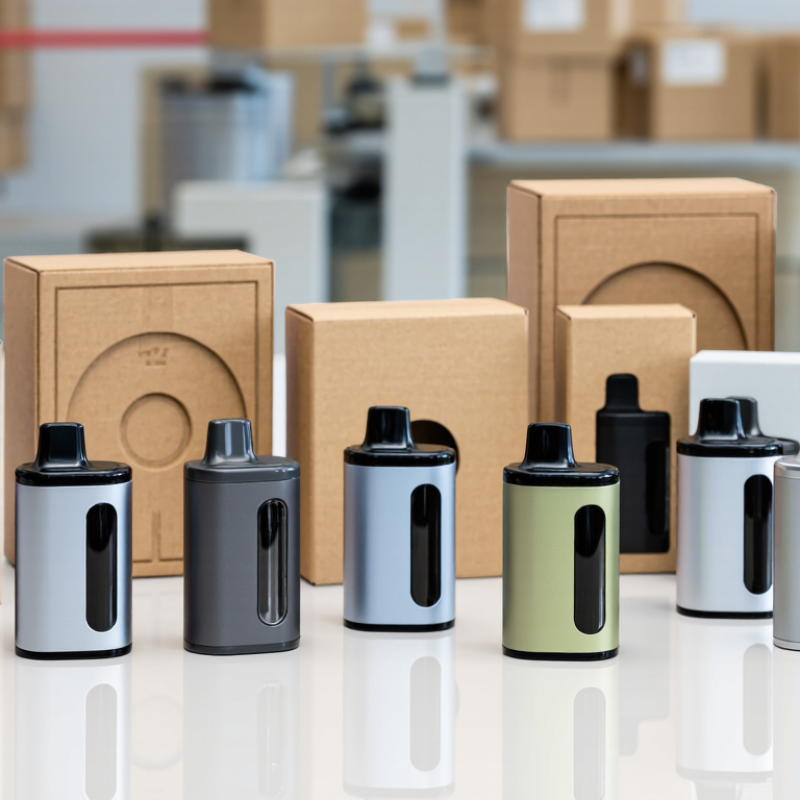
Custom vape packaging must serve different products without creating confusion. Folding boxes protect pods and support tamper-evident features. Small bottles need leak-resistant closures and upright storage. Display sets can combine cartons, pods, and information cards for retail shelves. Glass may improve barrier performance, while recyclable paperboard can reduce material weight. The right choice depends on filling equipment, transport distance, and local packaging rules.

Smithers’ The Future of Global Packaging to 2028 report projects the global packaging market will approach 1.2 trillion US dollars by 2028. This growth increases pressure on suppliers to offer efficient formats, not attractive artwork alone. For global buyers, box dimensions should match pallet patterns. Bottle labels need strong adhesion in humid warehouses. Pod trays should hold each unit firmly, even after repeated handling. Display sets require clear separation between samples and saleable products. Small details matter.

Tips: Request a packaging test report before ordering. Check drop resistance, seal integrity, print consistency, and material declarations. ISO 18601 guidance supports a life-cycle approach to packaging design. However, one format rarely fits every market. A lighter box may lower shipping emissions but feel less premium. That trade-off deserves testing. Supplier claims also need independent verification, because “recyclable” can depend on local collection systems.

Supplier Comparison: Pricing, Printing Quality, Logistics, and MOQs

Choosing among the 10 best custom vape packaging suppliers requires more than comparing quoted prices. A low unit cost may exclude structural samples, color proofing, or export-grade cartons. For small test runs, realistic MOQs often range from 500 to 2,000 units. Larger orders can reduce prices, but unused stock ties up cash. Ask for a physical sample. Digital images hide weak folds and uneven coating.

Printing quality shows in small details. Check barcode sharpness, foil alignment, matte texture, and color consistency across batches. Experienced suppliers should explain material thickness, insert fit, and protective finishes clearly. Logistics matters just as much. Confirm production time, carton dimensions, shipping terms, tracking, and customs documentation before payment. A supplier promising seven-day delivery may be quoting production only. That mistake is common. Plan extra time for inspections and port delays.

For products described with terms such as “Thc-O Vape,” buyers should request a documented legal and safety review before approving artwork or shipment. Packaging must avoid unsupported health claims and meet the destination market’s labeling rules. Reliable suppliers can provide test reports, material declarations, and batch records without hesitation. Still, paperwork is not proof of perfect performance. I would compare two samples under warehouse lighting and inspect ten folded cartons by hand. It feels slow, but it reveals problems that a polished quotation cannot.

Sustainability Review: Recyclability, FSC Paper, and Material Traceability

For global buyers, recyclable structure should be tested before visual design. The OECD’s Global Plastics Outlook reports that only 9% of plastic waste was recycled worldwide in 2019. This exposes the weakness of plastic-heavy formats. Custom packaging suppliers should prioritize recyclable paperboard, limited coatings, and easily removable inserts. A package may look sustainable.

FSC-certified paper offers stronger sourcing evidence, but certification is not the same as complete environmental performance. The Forest Stewardship Council’s chain-of-custody system helps track certified material through approved supply stages. Buyers should request the certificate number, scope, and manufacturing site. CEPI reported a 79.3% paper recycling rate in Europe in 2022. Regional collection systems still differ widely. That matters for Cbd Oil Vape packaging sold across multiple markets.

Material traceability needs more than a recycled-content symbol. Ask suppliers for fiber percentages, mill documentation, ink specifications, adhesive details, and current test reports. Packaging engineers should also check whether foil laminates or plastic windows disrupt paper recovery. The European Commission’s Packaging and Packaging Waste framework increasingly emphasizes recyclability and producer responsibility, yet supplier claims can remain incomplete. A practical audit may reveal that a carton labeled recyclable depends on facilities unavailable in the buyer’s target region. That uncomfortable gap deserves attention.

FAQS

What should buyers evaluate beyond packaging appearance?

Buyers should check materials, dimensions, batch controls, tolerances, and production consistency. Attractive samples can still fail during transport.

Which materials suit different packaging requirements?

Paperboard supports efficient printing and lighter structures. Aluminum improves light and moisture protection. Glass offers strong barrier performance but adds weight and breakage risk.

What documents should suppliers provide?

Request material specifications, composition records, recycled-content certificates, migration tests, and current laboratory reports. Samples alone are not enough.

What makes child-resistant packaging reliable?

The closure should resist opening by children while remaining usable for adults. Testing may include opening attempts, age groups, and repeated-use assessments.

Are all child-resistant standards interchangeable?

No. Requirements can differ by destination and package type. Confirm the applicable standard before finalizing the design.

What details can cause closure testing problems?

Thread depth, liner thickness, seal alignment, and repeated opening can change performance. A secure-looking cap may still fail testing.

How should buyers test custom boxes, bottles, or trays?

Request drop testing, seal checks, print inspections, and material declarations. Test filled packages, not empty prototypes only.

How can packaging support shipping and warehouse operations?

Match box dimensions with pallet patterns. Use strong labels for humid storage. Keep trays stable during repeated handling.

Does recyclable packaging always reduce environmental impact?

Not necessarily. Collection systems differ between markets. Lighter packaging may reduce shipping emissions but feel less premium.

Why are pilot runs and retained samples useful?

Pilot runs reveal filling, transit, and humidity problems early. Retained samples help compare later batches. Small safeguards matter.

Conclusion

This guide examines the 10 best custom vape packaging suppliers for global buyers by comparing product range, materials, minimum order quantities, lead times, certifications, printing quality, pricing, and logistics. It explains how buyers can customize vape packaging in practical formats, including folding boxes, bottles, pods, and display sets, while matching packaging specifications to product size, shipping needs, and market requirements. Special attention is given to child-resistant designs tested under 16 CFR 1700 and ISO 8317 standards, helping buyers evaluate safety performance and documentation.

The article also reviews key regional requirements, including limits for refill volumes and nicotine concentrations in the EU, and highlights sustainable options such as recyclable materials, FSC-certified paper, and transparent material traceability. By comparing supplier capabilities and compliance support, buyers can select packaging partners that deliver reliable quality, responsible sourcing, efficient production, and consistent international logistics.
Mia

Mia

Mia is a dedicated marketing professional with a deep expertise in the realm of CBD vapor manufacturing and supply-chain integration. Since joining Magix in 2016, she has played a pivotal role in guiding brands through the journey from concept to market-ready products. Her keen understanding of the......
Previous Top China CBD Vape Manufacturers for Global Buyers